511now / Answers / Do I need chains?
Do I need chains?
Updated August 19, 2026 · Pictures refresh every few minutes
Your state's official pass page is the definitive source. Washington posts it on WSDOT mountain passes, Oregon on TripCheck / Oregon 511, Idaho on Idaho 511.
We show the cameras so you can see the road. We never guess chain levels from a picture — and a clear picture does not cancel a chain requirement.
Washington: Snoqualmie, Stevens, White, Blewett
WSDOT posts the requirement per pass, and the wording changes day to day. Washington sometimes lets AWD and 4WD (all-wheel drive and four-wheel drive) skip putting chains on while still requiring them to be carried. Read the exact wording for that day, then walk the Snoqualmie cameras west to east.
Oregon: Government Camp, Siskiyou, Santiam
Oregon can require chains on all vehicles, including AWD, and can hold traffic until you chain up. The common asks are US-26 at Government Camp for Timberline and Mt. Hood Meadows, I-5 over Siskiyou, and OR-22 / US-20 over Santiam. Check TripCheck, then the Hood cameras.
See the passes right now
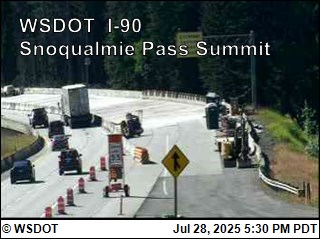 Snoqualmie · Summit WestWSDOT
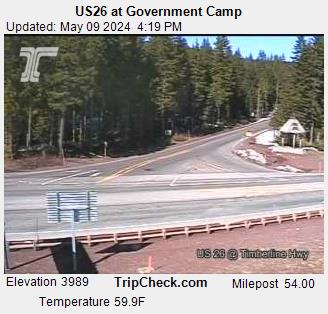 Government CampODOT
Official stills. The picture shows the road; the state page says if it is open.
Idaho: Lookout Pass on I-90
Lookout Pass is the common ask for people crossing from Spokane toward Montana. Idaho 511 is the definitive source; we show the Lookout Pass cameras.
AWD, 4WD, and trailers
- AWD / 4WD: not an automatic pass. Washington often lets you drive unchained but still requires carrying chains. Oregon can require chains on everyone.
- Trailers and towing: the trailer is part of the requirement, and it differs by state and by weight. Read the official wording for that pass, that day.
- Fines: ignoring a chain requirement can mean a ticket and being turned around — and a blocked pass for everyone behind you.
Why the picture is not the answer
The valley can look wet when the summit is ice. Night glare can look like snow. A picture from two hours ago can be wrong. The pictures help you plan; the official page is the law that day.
Sources
- WSDOT mountain passes — Washington rules.
- Oregon 511 / TripCheck — Oregon rules.
- Idaho 511 — Idaho rules.